Music, decorative craftsmanship, and sacred imagery contribute to the distinctive character of Maltese cultural celebrations. They reflect skills and knowledge developed through practice and shared experience.
Musical heritage
Music is both performance and cultural knowledge. The choice of repertoire, ceremonial setting, and experience of musicians can connect religious and public elements of a celebration.
Decorative craftsmanship
Traditional displays often depend on careful design, construction, maintenance, and storage. Recognising this work helps visitors see the artistic value behind banners and ornamental details.
Religious art
Sacred imagery carries religious significance as well as artistic expression. It deserves interpretation that respects devotion and avoids unsupported claims about the age, maker, or identity of a particular object.
Visual traditions
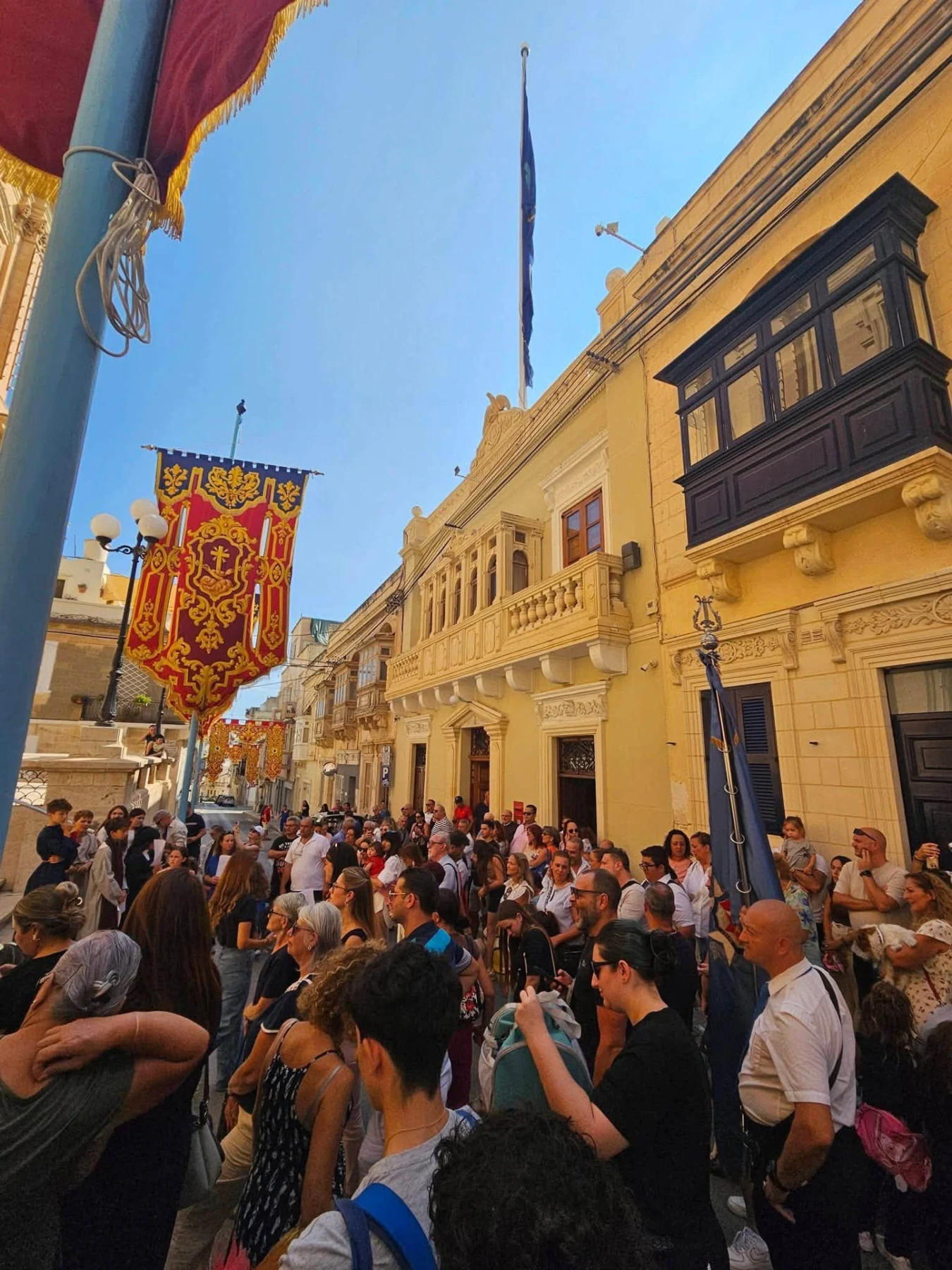
Banners, ornaments, and public decorations can transform the atmosphere of a street. Their colours, patterns, and placement create a shared visual language within the context of a celebration.
Community creativity
Shared artistic interests can give people opportunities to cooperate and learn from one another. The value of creative participation extends beyond the finished display or performance.
Passing on artistic knowledge
Craft skills and performance practices are best preserved through explanation, practice, and accurate records. We encourage appreciation of this knowledge without claiming that the organization runs a confirmed arts or music program.